
AESTEA
Correction of the abdomen
During tummy tuck, excess skin or skin and fat that remains after weight reduction or after childbirth is removed. On the abdomen, it is usually also necessary to tighten the muscle layer, stapling the separated straight abdominal muscles. This will reduce the circumference of the abdomen, firm it and tighten it.
The procedure is usually associated with a two-day stay at the clinic.
Short waiting time
Most procedures are within one month.
8 000+
Procedures performed.
Many years of experience
We have been in business for more than 24 years.
Correction of the abdomen
The course of the procedure
Through illness, pregnancy or overweight, the abdominal wall has been stretched and loosened. The aim of the operation is to tighten the skin of the abdomen, remove the skin excesses, and possibly also tighten the muscle layer, sometimes at the same time as the hernia operation. Sometimes it is advisable to add liposuction in the abdomen and hips.
How the examination is carried out
During the pre-operative consultation, we will ask about the patient’s wishes, problems and ideas about the post-operative appearance of the abdomen and the surrounding area. We assess the size of the skin excess, look for the presence of spacing of the rectus abdominis muscles or hernia, and assess the amount of subcutaneous fat. The general health of the patient is also important.
What is the preparation before the procedure
In preparation for surgery, it is necessary to:
- discontinue all medication causing increased bleeding
- consider, in order to reduce the risk of embolism, discontinuing contraception three weeks before the procedure
- maintain a 2-3 week interval since the last infectious disease
- not smoke – in order to improve healing before and after the procedure
- not drink or eat anything 6 hours before the procedure
- not underestimate cleansing and hygiene on the day of surgery, and not wear make-up
The day before the procedure, we mark the surgery plan on the patient’s skin. We try on compression underwear, and make photo documentation.
Performance of the procedure
The operation is performed under general anaesthesia. The skin and subcutaneous tissue is released from the lower abdomen to the rib arches and stretched downwards. In order to smooth the skin over the navel, the navel must be repositioned higher, although it actually remains in place. In most cases, it is advisable to simultaneously bring together and suture the distended abdominal muscles, thereby achieving a flattening of the abdomen and a reduction in waist circumference. If a hernia is present, it is treated simultaneously. If there is a higher layer of fat in the waist, hips and above the navel, liposuction may be appropriate. This is followed by removal of the skin excess. All suturing of the wounds is done very carefully, with absorbable thread and plastic sutures that do not leave a “ladder”. Usually a drain is required.
Just after the operation
After surgery, a tight elastic band is applied to the entire abdomen. Postoperative pain in the first hours is effectively suppressed. Bed rest with hip flexion is required for the first 24 hours. Frequent movement of the legs is necessary to promote blood flow.
In the following days you will practice getting up and walking without straining the abdominal muscles and pulling on the wound.
Drain removal, bandage change and discharge is usually possible the day after surgery. From then on, the wounds are covered only with a special plaster, and it is necessary to wear an elastic waistband for 2 months.
What is the postoperative care
It is a sensitive and extensive procedure and the post-operative follow-up and care corresponds to this. We strive for maximum comfort of our clients. Experienced nurses monitor the overall condition and are supportive in managing the discomforts of the post-operative period.
The operation is usually followed by a two-day stay in the clinic. It is necessary to take into account the subsequent pain, which is relieved by analgesics, as well as nausea.
Usually, a follow-up about a week after surgery is appropriate. A rest period of about 14 days with lower limb exercises and frequent getting up is necessary. Showering is possible after 10 days. The umbilical stitches are removed on the 13th to 15th postoperative day.
Each client leaves our clinic fully informed and familiar with all possible and expected symptoms of the postoperative condition. If in doubt, the client is free to contact the surgeon at any time.
We recommend taking 3 weeks off, or in these cases you can also apply for sick leave. You can return to work after 3 weeks, but sometimes after up to 3 months depending on physical demands of the job. A return to a more or less normal life can take just as long.
Correction of the abdomen
Price of the procedure
The cost of the procedure depends on the amount of tissue removed and the amount of fat sucked out.
Results
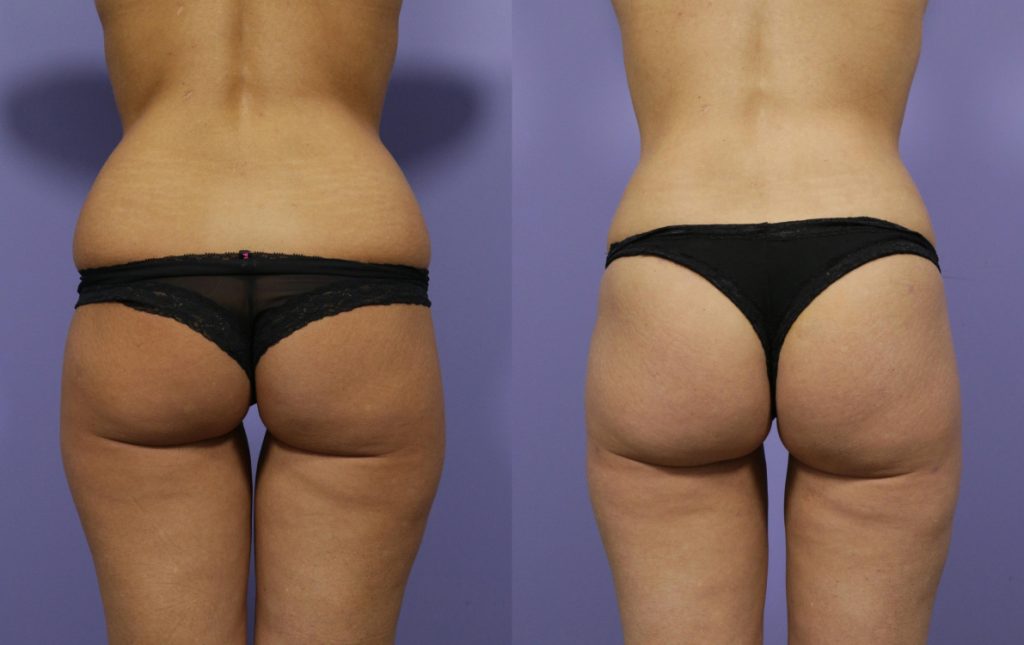
Before and after the procedure
Photographs of the operated areas taken before and after the procedure perfectly illustrate its optical effect. However, for many procedures, we should not forget about their health effects, such as increased mobility, pain reduction, etc.
Before
After

Before
After
Reviews
What clients say
Morem ipsum dolor sit amet, consectetur adipiscing elit. Nunc vulputate libero et velit interdum, ac aliquet odio mattis.
S.B.
Laura N. (GB)
D.F.
Frequently Asked Questions
You ask, we answer
What technique do you use for liposuction?
There are several techniques of liposuction. At the aestea clinic we use the so-called super-wet technique. In this technique, the affected area is first infiltrated with fluid and then the fluid is suctioned out together with the fat. The amount of fluid infiltrated is approximately the same as the amount of fat suctioned during the operation.
Is there a weight limit for surgery?
We often operate on patients who weigh over 100 kg, the maximum possible weight for surgery is 120 kg.
Does surgery guarantee complete elimination of the disease?
Removal of unwanted adipose tissue leads in most cases to pain reduction, improved mobility and overall life satisfaction. However, the removal of all fat, whether lipedema or otherwise, cannot be guaranteed. Similarly, liposuction can by no means be said to be the absolute and exclusive cure for lipedema.
Is it possible to operate on the upper and lower limbs at the same time?
For a number of reasons, we do not recommend liposuction of the upper and lower limbs in one operation.
When can I go back to work after surgery?
It depends on the extent of the operation, how many litres are suctioned, but also on the individual sensitivity and resistance of the patient. We recommend taking a leave of 1-2 weeks. After 2-3 weeks it is usually possible to return to normal life.
Free
Consultation with our expert
Pre-operative consultations with our doctors are free of charge. Schedule a personal consultation appointment at the clinic or contact us by email; you will receive all the information you need without having to visit our clinic.